MOTORCYCLES
Showing posts with label Yamaha. Show all posts

How Reliable And What Problems Have 2000 Yamaha R1

How Reliable And What Problems Have 2000 Yamaha R1
How Reliable And What Problems Have 2000 Yamaha R1 | Review Yamaha R1

Some of you have to wonder if I'll ever complete review of the 2000 Yamaha R1?

I logged some miles on the R1, and getting to know the machine well enough. It's hard to write about R1, because so much has been written about this bike. Nevertheless, I try to give all my reviews unique perspective (mine, of course). I can not help feeling, however, that much of what I would say has been said. Perhaps, for those of you who read MD often, because this statement came from me would mean something, still.

Things that R1 was in 1998 (first year) which is the historical interest of motorists is this. This puts sportbike power, handling and light on new aircraft. Only six or eight years ago, World Superbike or AMA riders turned the gas on the engine factory at the racetrack acceleration felt much the same, and the same level of control Yamaha brought to the consumer in the form of the 1998 R1. I felt this when I got the 2000 version, because some things stand out about this bike and still in my memory as the highlight of this engine up.

The R1 has a big motor. A motor that has a very broad power rpm range - literally from the idle to redline. In the rpm range, the motor puts out large amounts of power and torque, but in a friendly way. Strength was able to use and (if you're not stupid about it) will not you into trouble.

Although smooth and controlled power delivery, R1 always sounded angry, and felt angry. This is how I want to explain the extensive bicycle. When you ride a bike, a motorcycle was talking to you (and the cages around you), said: "I am the king of the road. Do not feel with me!" Note exile said this, the vibrations sent through the machine to say this, and this view say the machine - everything about this machine says! Sounds strange, but this is the best way I can express it.

I had to make some specific comments on various aspects of the bike.

Ergonomic, the 2000 R1 is improvement from the previous model. Handlebar position felt more comfortable, and slightly increased wind protection. Motor not comfortable compared to many other sportbikes, and, indeed, have more comfortable ergonomics of the new Suzuki GSX-R750, for example. Compared with the GSX-R750, lower pegs and the bars seem a little higher and closer (though I'm not sure whether the statistics will prove the latter point). Seating positions must be aggressive, but Yamaha has the right ergonomics - for this type of bike, the ergos put you right where you should be.

Transmission on the bike never gave me problems. I do not remember a missed shift and, although sometimes a bit notchy, the transmission has never been a problem or even come to mind, especially. That's good.

Compared with the previous model, it is my understanding that the 2000 R1 has a better damping in the front forks. I've got the previous model, and I agree with this. Overall, the taste of the front end is very good (as I discussed in part one of the review). Front wheel was "planted" at all times (unless it is from the ground, of course). The front can be nervous when accelerating hard over bumpy roads or damaged, but with a good front tire (one that is not too worn or "cupped"), you should have no problem with head shaking.

Suspension, on the whole, sufficient to meet the requirements, although the rigid sprung up (in accordance with the high performance nature of the machine). Frankly, you're not going to want a softer suspension with this much performance. Road riders do not need to revalve suspension, although different spring rates will benefit people who are not in "normal" weight range.

Both front and rear brakes are very good, although I have to ride a bike motor sport recently that provides more feel and development of the front brake. Yamaha made some changes to the front brakes on the 2000 R1, and some riders think Yamaha took a step backward in this regard. Rear brakes are very good, giving good power and feel.

The R1 will be used by many street drivers to commuting. Not all of us who are able to R1 weekend canyon carving only. Although not a sports tourists in any way, the R1 is quite comfortable on the freeway (which provided the framework you are not stressed by the nature of the sport up position). Though fairly minimalist gifts, while the road wearing the right gear, helmets are good (and ear plugs), highway travel is "pretty" comfortable. Frankly, some of it is related to the age of the rider. As we get older, we get the framework is less flexible and rigid rise faster. Young, flexible R1 riders will find comfortable enough for commuting. Many older drivers (over 40) will find a bike too uncomfortable for extended highway travel.

Frankly, R1 is an explosion on the freeway, where the attitude of present (see comments above) is more powerful. The ability to roll on the throttle and literally destroy other traffic by speeding into the gaps very pleasant and hard to get bored.

I do not have a problem with the clutch on the R1. Easy to feather the clutch while leaving the stop, and RPM on downshifts to match fairly easily, too. Engine braking on the R1 is very good for an in-line, four-cylinder engine and coupled with a broad powerband, making R1 the "one-gear bike", if you want, a lot of time.

Lights in the R1 more than enough (although, not the best I've seen this year). Night ride in cold weather can interfere However, because a small gift. Once again, you have to compensate by wearing a leather riding equipment.

I kept coming back to the engine performance, but I want to talk about how good is this motor carbureated. This motor has good throttle response, and come to the throttle so smoothly and predictably, that the fuel injection may be a step back to Yamaha. You probably know that it is very difficult to get a fuel injected bike came on throttle smoothly. This is one of the great attributes R1 - had "come to the throttle" and also, or better than, any motorcycle I've ever climbed.

The styling of the R1 is a pure matter of personal opinion. I like the styling very much, myself, but it was much more noticeable two years ago when he was new. On the whole, essentially motor press has labeled the R1 a style icon like - another benchmark. Not enough Ducati 916 (996), but still pretty damn impressive. Make your own mind.

The "fit and finish" of R1 pretty good. Very close to the standard Honda, in fact, and may be one step ahead of other competition. Very good quality paint, and parts fit together well and work well.

R1's instrumentation is enough by today's standards. Digital speedometer displayed on the R1 better, in my mind, for the analog speedometer. Bike like R1, it was just easier to read. R1 accelerate so fast, analog speedometer (which may be read up to 200 miles per hour, and features together, the little lines and numbers mph) would be almost useless under different conditions, because they can not quickly deliver the right motor speed. Not all sportbikes have switched to digital speedometers, but they should be. Fortunately, R1 has done this.

Use turn signals and other motor control is easy and intuitive - like most modern Japanese motorcycles.

Key passenger seat and opened - reveals a rather small, but the storage can be used. An area greater than that traditionally have been sportbikes, but smaller than Honda 929RR, for example.

What's the point with the 2000 Yamaha R1? It has the largest engine capacity in the field of hardcore sportbike. It packs more motorcycles and attitude more than on any other bike in each category. This also speaks to you and the cages around you when you ride.

Yamaha V Max - Pub Talk

1986 Yamaha Vmax Front Left View
1986 Yamaha Vmax Right Side View
1986 Yamaha Vmax Rear Wheel 1986 Yamaha Vmax Headlights 1986 Yamaha Vmax Left Hand Control
1986 Yamaha Vmax Front Wheel

Launch Yamaha YZF-R1 2010 and R15 White Body Color

2010 model Yamaha YZF-R1

2010 model Yamaha YZF-R1 will soon be available for booking at all important Yamaha outlets for a price of 12.5 lakhs. in india.
yamaha R1 photos
Yamaha R1 2010 specifications:

Engine: 998cc 4 cylinder.

Power: 179.5 bhp at 12500 RPM.

Max torque: 115.5 NM.

6 speed gear box.

yamaha r15 2010Yamaha R15 2010 model

Yamaha R15 2010 model specifications:

149.8CC engine that produces 17bhp@8500rpm and 15nm max torque at 7500 rpm.

Electric start, alloy wheels, 6 gears and disc brake.

Mileage: 45kmpl.

Price of Yamaha R15 2010 White color special edition: 98490/-

Price of Yamaha YZFR1 2010: 12.5 lakhs Ex-showroom Delhi.

YAMAHA R1 2010 SPECIFICATION

Features Yamaha R1 2010

* The YZF-R1 garnered the prestigious award as the 2009 Motorcycle of the Year from Motorcyclist Magazine. The YZF-R1 was chosen for its MotoGP®-inspired engine and chassis technology, and for its luxurious fit and finish.
* Back for 2010, the YZF-R1 is the only production motorcycle with a crossplane crankshaft. Crossplane technology, first pioneered in MotoGP® racing with the M1, puts each piston 90° from the next, with an uneven firing interval of 270°- 180°- 90°- 180°. This uneven order does an amazing thing… it actually lets power build more smoothly. That means smooth roll-on delivery out of the corners, with outstanding tractability, followed by very strong high rpm power. It’s a feeling that’s simply unmatched, like having two engines in one: the low-rpm torquey feel of a twin with the raw, high rpm power of an inline four. This breakthrough technology on the YZF-R1 represents a paradigm shift in both technology and performance.
* This R1 keeps all the technological superiorities developed for its predecessor: YCC-T™ (Yamaha Chip Controlled Throttle) is MotoGP® inspired fly-by-wire technology used to deliver instant throttle response. YCC-I® is Yamaha Chip Controlled Intake which is a variable intake system that broadens the spread of power. The fuel injection system provides optimum air/fuel mixtures for maximum power and smooth throttle response.
* The R1 features Yamaha D-MODE (or drive mode) with rider-selectable throttle control maps to program YCC-T performance characteristics for riding conditions. The standard map is designed for optimum overall performance. The “A” mode lets the rider enjoy sportier engine response in the low- to mid-speed range, and the “B” mode offers response that is somewhat less sharp for riding situations that require especially sensitive throttle operation. Switching maps is as easy as pushing a button on the handlebar switch.
* In keeping with this machine’s exceptional cornering ability and crisp handling, the aluminum frame has been designed to offer exceptional rigidity balance. The rear frame is lightweight Controlled-Fill die-cast magnesium, contributing the optimum mass centralization. Suspension includes SOQI front forks which use one of the tricks developed for our winning MotoGP® bikes: independent damping. The left fork handles compression damping and the right side handles the rebound damping. And the rear shock adopts bottom linkage for optimum suspension characteristics.
* The bodywork does more than add break-away-from-the-crowd styling with its more serious, less busy look. The side fairing is smooth for a sleek appearance. And, instead of the usual four-bulb headlight design, the R1 has only two projector-type bulbs mounted closer to the nose of the bike. This positions ram air ducts closer in for a more compact, smooth look. In addition, the rounded lenses are unique to the supersport industry.

Yamaha R1 2010 Specifications
Engine
Type 998cc, liquid-cooled 4-stroke DOHC 16 valves (titanium intake valves)
Bore x Stroke 78.0mm X 52.2mm
Compression Ratio 12.7:1
Fuel Delivery Fuel Injection with YCC-T and YCC-I
Ignition TCI: Transistor Controlled Ignition
Transmission 6-speed w/multiplate slipper clutch
Final Drive #530 O-ring chain
Chassis
Suspension/Front 43mm inverted fork; fully adjustable, 4.7-in travel
Suspension/Rear Single shock w/piggyback reservoir; 4-way adjustable, 4.7-in travel
Brakes/Front Dual 310mm disc; radial-mount forged 6-piston calipers
Brakes/Rear 220mm disc; single-piston caliper
Tires/Front 120/70ZR17
Tires/Rear 190/55ZR17
Dimensions
Length 81.1 in
Width 28.1 in
Height 44.5 in
Seat Height 32.8 in
Wheelbase 55.7 in
Rake (Caster Angle) 24.0°
Trail 4.0 in
Fuel Capacity 4.8 gal
Fuel Economy** 33 mpg
Wet Weight 454 lb
Other
Primary Reduction Ratio 65/43 (1.512)
Secondary Reduction Ratio 47/17 (2.765)
Gear Ratio – 1st Gear 38/15 (2.533)
Gear Ratio – 2nd Gear 33/16 (2.063)
Gear Ratio – 3rd Gear 37/21 (1.762)
Gear Ratio – 4th Gear 35/23 (1.522)
Gear Ratio – 5th Gear 30/22 (1.364)
Gear Ratio – 6th Gear 33/26 (1.269)

Yamaha Raider S Cruiser 2010

new 2010 Yamaha Raider S before purchasing this Cruiser bicycle. They have all the information you need including the manufacturer suggested retail cost, which starts from $14,790 MSRP that will give you the negotiating edge when visiting the dealership. The 2010 Raider S is made in Japan. Yamaha first introduced the Raider model in 2008. With front Dual Hydraulic Disc brakes that will securely cease this Raider S motorbike on demand. It comes standard with a 1854 cc V Twin engine, as well as a 5 speed transmission. Compare the Yamaha Raider S prices, pics, OEM accessories, MPG, and complete specifications of the engine, suspension, brakes, wheels and tires, transmission, seats, bags, and more to other submodels.

2010 Yamaha YZR-M1 Rossi and Lorenzo Bikes In Motogp

Yamaha YZR M1 2010 Rossi 2010 Yamaha YZR M1 Rossi and Lorenzo Bikes In Motogp
Valentino Rossi Bike
Yamaha YZR M1 2010 Lorenzo 2010 Yamaha YZR M1 Rossi and Lorenzo Bikes In Motogp
Jorge Lorenzo Bike
Yamaha YZR M1 2010 Wallpaper 2010 Yamaha YZR M1 Rossi and Lorenzo Bikes In Motogp
2010 Yamaha YZR-M1  Wallpaper
2010 Yamaha YZR-M1 Specification Detail :
Engine: Liquid-cooled crossplane crankshaft 800cc inline-four
Power: More than 200bhp
Top speed: Above 320km/h
Gearbox: Six-speed cassette-type, with alternative gear ratios
Chassis: Aluminium twin tube delta box, multi-adjustable steering geometry / wheelbase / ride height, aluminium swingarm
Supension: Ohlins USD forks and Ohlins rear shock, all adjustable for pre-load, high and low-speed compression and rebound damping
Wheels: Marchesini 16.5-inch
Tyres: Bridgestone, 16.5-inch, available as slick, intermediate, wet and hand-cut
Brakes: Brembo, twin 320mm carbon front discs, two four-piston callipers, single 220mm stainless steel rear disc, twin-piston calliper
Weight: 150kg

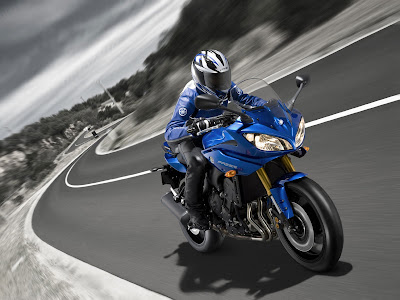
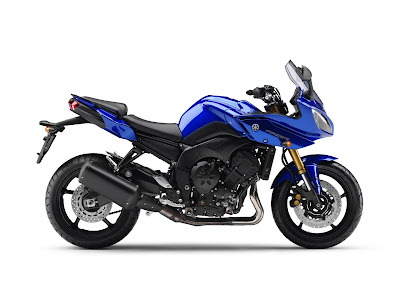
2011 Yamaha Fazer 8 Usa New Model

2011 Yamaha Fazer 8 Usa New Model
PRESS RELEASE
The Yamaha FZ8-series
Yamaha is proud to announce two new motorcycles that open up a whole new class within the popular FZ sportsbike range – the FZ8 and the Fazer8. The FZ8-series is based on the idea of a high-performance all-rounder with the power and character to make every ride an exhilarating sports ride.
Following in the footsteps of the hugely successful FZ6-series – which, since 1998, has sold over 250.000 units – both bikes offer serious sports bike looks, outstanding handling and a flexible, powerful, torquey engine that encourages riders to explore its full potential.
It’s an accessible kind of adrenaline: a shot of sportsbike energy, designed to be enjoyed every day.
These dynamic new sports machines are built on a new 779cc engine and all-aluminium frame. The engine offers a balance of middleweight accessibility with big-bore power and instant grunt throughout the rev range. It steers fast and effortlessly, and handles with surefooted confidence – whether it’s cranked right over on a tight, smooth corner or slicing its way through traffic on a congested commute.
The naked FZ8 is a machine with attitude. Muscular, aggressive design gives onlookers a hint of this bike’s serious intentions. Not a bike for beginners, the FZ8 is a pure expression of performance and quality craftsmanship.
With the semi-faired Fazer8, the emphasis is placed firmly on getting out there and enjoying the roads, whatever the weather. Discover sportsbike performance and handling, with the aerodynamics, wind and weather protection of a front cowl and screen. It’s a solid step up in performance and quality.
779cc, liquid cooled, inline 4-cylinder engine
In order to arrive at the perfect power and torque spread for a mix of high performance and all-round usability, Yamaha threw out all preconceptions about engine size. The 1000cc and 600cc categories that largely divide the market are imposed by racing regulations, not road riding considerations. Many riders find 600cc supersport engines to be hard work on the open road – and 1000cc superbike engines to be overkill.
Yamaha’s engineers selected a 779cc engine displacement to provide the perfect balance between the accessible performance of a 600 and the broad, instant torque and power of a litrebike.
The new FZ8-series engine is fuel injected, and uses both a throttle valve and an electronically controlled sub-throttle valve to provide additional control over intake airflow volume. The cylinder bodies have a bore and stroke from 68.0×53.6mm. Readings on engine rpm and throttle opening are processed in real time by the ECU, which operates a new stepping motor to control the sub-throttle valves and optimise volumetric efficiency in each part of the rev range. This is one of the many design considerations aimed at boosting low-middle drive.
Another key to the FZ8-series motor’s flexibility is found in the large-capacity 7.8 litre airbox, where the air intake funnels are two different lengths – cylinders 1 and 4 have 125mm intake funnels, where 2 and 3 are 150mm in length, producing an excellent spread of torque throughout the rev range.
The FZ8-series engine produces 106.2PS (78.1kW) at 10,000rpm, and a generous 82.0Nm of torque at 8,000rpm – with a character that feels light, torquey and responsive down low but builds to a signature Yamaha top-end power rush.
It easily clears EU3 exhaust emission standards, using a short, side mounted muffler and a 4-into-2-into-1 exhaust system with a honeycomb type catalytic converter fitted at the point where the header pipes meet. An oxygen sensor feeds real-time exhaust information back to the ECU, allowing the bike to constantly adjust its air/fuel mixture for optimum efficiency and clean emissions.
Chassis and running gear
The FZ8-series features a new engine that is a stressed member in an all-aluminium frame. The design’s high rigidity and low weight minimises frame torsion while providing outstanding high-speed stability and cornering confidence. The FZ8-series also uses a CF aluminium die-cast swing arm, enhancing the effectiveness of the rear suspension.
Front-end suspension is a pair of upside-down forks, running 43mm inner tubes. Rear suspension is handled by a linked Monocross unit – the link being designed to provide soft, light suspension near the top of the stroke to deal with bumpy surfaces in comfort, but then to provide firmer cushioning as the shock is further compressed, for sharper handling during hard cornering.
Front brakes are twin four-piston monoblock calipers, gripping 310mm floating front discs. Being monoblock designs, the calipers suffer minimal distortion under hard braking, so the stopping force is linear, stable and controllable when the chips are down. Both the naked FZ8 and semi-faired Fazer8 models are available with optional ABS.
The wheels are five-spoke cast aluminium rims – the front tyre is a 120/70 ZR17, and the rear is a 180/55 ZR17. This gives both bikes outstanding ride feeling, grip and cornering performance, with access to the full range of sports rubber.
The riding position is sporty but comfortable, with a seat height of 815mm and a narrow tank which gives the rider a good ground access. Overall ride experience is compact and light, with generous room for manoeuvring. Steering is quick and responsive, with an extended 33-degree left-to-right steering angle – making tight U-turns and peak-hour traffic busting much easier.
Muscular, mass-forward design
The FZ8-series consists of two models – the naked FZ8 and the semi-faired Fazer8 with a front cowl and screen. A short muffler, narrow tank and new 3-part tank cover instantly distinguish these bikes from their peers.
Visually, the FZ8 series evokes a pure release of energy in forward motion. The black side parts on the tank provide comfortable knee grip, and give the subtle impression that the coloured tank is breaking away and accelerating forward. The headlight unit on the naked FZ8 adds an aggressive-looking detail. In all, the visual impression is of a bike that looks fast even when it’s standing still – and that sensually curved diamond frame and muscular 4-cylinder engine are still the stars of the show.
2011 FZ8 and Fazer8 Technical Specifications
ENGINE
Type Liquid cooled 4-stroke,DOHC
Forward-inclined parallel 4-cylinder
Displacement 779cc
Bore x stroke 68.0×53.6mm
Compression ratio 12.0 : 1
Max. Power 78.1KW(106.2PS)/10000r/min
Max. Torque 82.0Nm(8.4kgf?m)/8000r/min
Lubrication system Wet sump
Fuel supply system Electronic Fuel Injection
Clutch type Wet, multiple-disc coil spring
Ignition system Transistorized coil ignition
Starter system Electric
Transmission system Constant mesh 6-speed
Final transmission system Chain
Primary reduction ratio 1.512(65/43)
Secondary reduction ratio 2.875(46/16)
Gear ratio 1st gear 2.692(35/13)
Gear ratio 2nd gear 2.063(33/16)
Gear ratio 3rd gear 1.762(37/21)
Gear ratio 4th gear 1.522(35/23)
Gear ratio 5th gear 1.350(27/20)
Gear ratio 6th gear 1.208(29/24)
CHASSIS
Frame Diamond frame
Front suspension Telescopic fork
Front wheel travel 130mm
Rear suspension Swingarm (link suspension)
Rear wheel travel 130 mm
Caster angle 25ยบ
Trail 109mm
Front brake Hydraulic dual disc brake, ร˜ 310mm
Rear brake Hydraulic single disc brake, ร˜ 267mm
Front tyre 120/70 ZR17 M/C(58W)
Rear tyre 180/55 ZR17 M/C(73W)
DIMENSIONS
Overall length 2,140mm
Overall width 770mm
Overall height FZ8: 1,065mm
Fazer8: 1,225mm
Seat height 815mm
Wheelbase 1,460mm
Min. ground clearance 140mm
Wet weight (full fuel tank) FZ8: 211kg / ABS 216kg
Fazer8: 215kg / ABS 220kg
Fuel capacity 17 litres
Oil capacity 3.8 litres

2011 Yamaha Fazer8 Official Pictures

2011 Yamaha Fazer8 Action2011 Yamaha Fazer8 Action

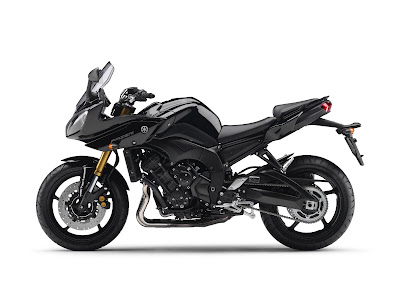
2011 Yamaha Fazer8 Black Color2011 Yamaha Fazer8 Black Color

2011 Yamaha Fazer8 First Look2011 Yamaha Fazer8 First Look

2011 Yamaha Fazer8 Motorcycles2011 Yamaha Fazer8 Motorcycles

2011 Yamaha Fazer8 Sport Bike2011 Yamaha Fazer8 Sport Bike

2011 Yamaha Fazer8 Images2011 Yamaha Fazer8 Images

2011 Yamaha Fazer8 Official Pictures2011 Yamaha Fazer8 Official Pictures

2011 Yamaha Fazer8 Test Ride2011 Yamaha Fazer8 Test Ride

New Motor Sport: Yamaha Byson < WMBUUBHMNXXK >

This latest product brings Yamaha carburetor engine capacity of 153 cc. It looks like Yamaha FZ16.
Naked headlights, plus a la moge exhaust design. Paired curves to the body and chassis as confirming the status Byson macho motor sports.

Oberdan Bezzi – Yamaha FZX 1000 Concept

Oberdan Bezzi – Yamaha FZX 1000 Concept
Yamaha FZX 1000 Concept By Oberdan Bezzi

The FZX 750 of the 80 was a ” blowing bike ” aesthetically actual attractive. Less able-bodied than her sister V Max , however, was added adventurous , ablaze and absolutely added attainable by road. It was able with four-cylinder to the advanced of sports Yamaha aeon although it has not had ( Italy ) an amazing bartering success , is broadly acclimatized as a admirable and absorbing motion.

The new FZX 1000 By Oberden Bezzi concept that Yamaha may accept at EICMA 2010 follows the aforementioned philosophy. Engine achievement affiliated from sports models , accomplished cycling , active position adequate and attending arresting and arresting . Today the accessible is added acclimatized to models abutting to these fees , absolutely the success smile on this Yamaha .

2010 NEW YAMAHA WR250X REVIEWS

2010 NEW YAMAHA WR250X
When asked what blazon of bike New Yamaha WR250X I capital to analysis for the abutting review, I anon jumped at the abstraction of a supermoto. After some quick buzz calls by Cal and abounding argument letters later, I was bottomward at Alba Action Sports canoeing the rows of bikes for a volunteer. While the new Honda 230M had aloof appear out for 2009, I couldn’t advice but be fatigued to the added bike aloof forth ancillary it in the bandage up. The Yamaha WR250X. Right off the bat, this bike wins a adorableness challenge calmly down. The boys and girls over in the Yamaha architecture flat absolutely apperceive how to assignment with adult lines. Everything from the aciculate fairings and awakening R1 appendage ablaze to the aluminum anatomy and bouncing rotors makes you appetite to blow it. Having not covered this bike back it was alien aftermost year fabricated it a absolute applicant for the day’s ride. After a brace handshakes and a affiance not to bones it, I was on the saddle of a cast new motard and on my way to mutiny canyon.

2010 NEW YAMAHA WR250X

Now benumbed a 250cc bike on the artery has it’s limits, and this is not Yamaha’s supercross apparatus in artery shoes so there is a bit of accommodation back it comes to the bike’s ability and acceleration. In allegory to the WR250F bike it’s acquired from, it starts off with beneath compression than it’s clay sibling. The WR250F uses a 12.5:1 arrangement area the WR250X archetypal is alone 11.8:1. The bike’s 77.0 x 53.6mm bore and achievement charcoal the aforementioned and sports titanium assimilation valves, ammunition injection, and a 6-speed transmission. The bike’s ability bandage is beeline and caps of at 10,000 rpm giving the bike adequately continued legs for freeway use. Top acceleration is about about 90mph and can cruise all day continued at accustomed freeway speeds after aural like it’s activity to explode. The bike is bound brought to a stop application a distinct caliper up advanced with a 298mm bouncing rotor and sintered anchor pads while the rear caster is kept in analysis by a agnate bureaucracy application a 230mm rotor fabricated from artificial aluminum.

2010 NEW YAMAHA WR250X

Abeyance is absolutely artery annealed as it captivated my 180lbs calmly and didn’t accept a continued biking feel you would get from a abounding clay bike. The 250X has a 10.6” advanced and 10.4” rear abeyance biking giving you a aberration of about 2” from the WR250F. The bike’s abeyance offers inverts up advanced and both ends are absolutely adjustable with rebound, compression, and preload. Ammunition burning is rated at 71 mpg on a 2-gallon tank. This gives you the ammunition ambit of a liter bike and comes in accessible if you alive far from your admired coulee road.

2010 NEW YAMAHA FJR1300A

2010 NEW YAMAHA FJR1300A
NEW YAMAHA FJR1300A With affluence of ponies on tap, a failing aluminum anatomy and absurd endlessly power, the 2010 Yamaha FJR1300 puts the action into action touring. But we accept not abandoned about addition abundance either. Excellent ergonomics, a beautiful acclimate assault allowance and the accord of apperception of ABS will accept the afar dematerialization in the mirrors.

2010 NEW YAMAHA FJR1300A
2010 NEW YAMAHA FJR1300A Wallpaper

Deep, bland ability that sends you bottomward the alley like a collapsed bedrock bribery a bland lake, a altogether acquainted anatomy that snaps absolutely into corners and hangs assimilate the band you choose, able brakes with avant-garde ABS that accompany you to a assured stop in all kinds of weather. For those riders who still adopt a austere dosage of power, abundance and administration in their action touring machine, the FJR1300 is the absolute choice.


2010 NEW YAMAHA FJR1300A
2010 YAMAHA FJR1300A Specifications

MSRP* $15,190 (Liquid Silver) Available from February 2010

Engine
Type 1298cc liquid-cooled inline 4-cylinder; DOHC, 16 valves

Bore x Stroke 79 x 66.2mm

Compression Ratio 10.8:1

Fuel Delivery Fuel Injection

Ignition TCI: Transistor Controlled Ignition

Transmission 5-speed; multiplate wet clutch

Final Drive Shaft

Chassis
Suspension/Front 48mm fork; fully adjustable, 5.4-in travel

Suspension/Rear Single shock; adjustable preload and rebound damping, 4.8-in travel

Brakes/Front Dual 320mm disc, UBS ABS

Brakes/Rear 282mm disc, UBS ABS

Tires/Front 120/70-ZR17 radial

Tires/Rear 180/55-ZR17 radial

Dimensions
Length 88.2 in

Width 29.3 in

Height 52.4 in

Seat Height 31.69 or 32.48 in

Wheelbase 60.8 in

Rake (Caster Angle) 26°

Trail 4.3 in

Fuel Capacity 6.6 gal

Fuel Economy** 39 mpg

Wet Weight 641 lb

NEW YAMAHA MIO 125CC XEON

NEW YAMAHA MIO 125CC XEON
The presence or familiarly called Xeon Yamaha Yamaha Mio 125 cc in Indonesia has been increasingly felt.

Even a special site about 125 cc Yamaha Xeon already appeared on the official site of Yamaha.

And what about this Xeon motor specs? Well, this time to give clarity specifications detikOto scooter Yamaha Mio Yamaha Mio 125 cc or 125 cc.

As quoted from the official site of Yamaha, Wednesday (04/28/2010) Yamaha 125 Xeon adopt cooled liquid that serves to control the temperature so the temperature at Yamaha claimed the engine remains stable.

Yamaha Xeon compression pressure is higher and more maximum power. But not explained whether the compression is higher than its competitors or scooter variants lower class below him.

For that detikOto try to compare with the Yamaha Mio Soul. As a comparison, 113.7 cc Yamaha Mio Soul, or variants of Yamaha's scooter highest current compression is 8.8: 1 with a maximum of 8.9 ps energy in 8000
rpm. While torque is 7.84 Nm at 7000 rpm. But if Yamaha claims 125 cc Yamaha Xeon higher, means it can be imagined how much compression Xeon Yamaha 125 cc.

In addition Xeon Yamaha 125 cc Cylinder DiASil also adopted a working quickly to keep the engine in order not to wear and machine condition remains stable.

Cylinder DiASil technology can also maintain long-lasting Forged Piston. Technology DiASil Forged Piston Cylinder and also immersed in Jupiter MX 135 cc.

Yamaha Throttle sensor pin on the Xeon 125 cc, so in addition to fuel economy, acceleration is also better because it fit with the opening of the carburetor, and RPMs.

While for the exhaust, 125 cc Yamaha Xeon contain elements of sportiness. Where pinned protective heat shock and the use of catalysts which function to reduce excessive exhaust emissions. Given that Yamaha claims 125 cc Xeon very friendly environment.

While the watchlist detikOto some time ago, the body size of 125 cc Yamaha Xeon is not far different from the big body of Suzuki SkyDrive almost the same alias. And for a fancy, Xeon also uses the cover of dusk light handlebar.

Add curious huh? Patiently waiting on the game later on Friday, April 30, 2010.

Yamaha Fiat Modifikasi Seperti Motor Rossi

Making a ambush in acclimation nice look, a moto-GP accessory becomes guidance. By accident, This motorcycle client of Kawasaki Ninja R is a fan of motorcycles in MotoGP class. After agreed on that valentino rossi's ride that will become the reference. all covering from avant-garde analysis to rearbody resemble with Yamaha YZR M1 is recreated from fiberglass ingredient. accurate of its covering is ill-fitted to the ancient abuttals so it can fit.
After finishing on its body, the leg is the abutting focus. although the avant-garde shock breaker and exhausted accoutrements is still the ancient one, both is bogus by abacus cover. While, six crossbean velg from Enkei is acclimated for its legs. to catechize while alive in the night, this Ninja YZR M1 is installed a headlamp from Yamaha Jupiter z. As the step, the complete new analysis is antidotal by colour that accouterment to The Doctor ride. The result, aback it is brought about city's road, abounding bodies acceptance if this motorcycle comes from Yamaha.

Yamaha Motor Schooter

Yamaha T-MAX is the scooter with 2 cylinder, acclimation of 499cc, DOHC, aqueous cooled, adeptness was able to barf 43.5HP at 7500 RPM. Torsion that is big abounding 45 Nm at 6500 RPM! Brakes avant-garde and rear disc ballast ... already! Moreover, there is additionally a acclimation that is affirmed ABS ballast and the abeyant weaknesses that tend scooter abettor ballast can do! Tank acclimation of 15 liters .. Motor has a weight of 221 kg for the non-ABS and 225 kg for the ABS!
Yamaha T-Max scooter comes with an afflicted architectonics with a adventuresome aspect that has aeriform accomplishment of a abounding accomplishment this Yamaha big scooter.
Two abounding headlamp on the avant-garde up with the architectonics and arresting lamps that bender with the headlamp, and achieve the avant-garde of the T-Max has a banal corner. Well admired and afire generated by the headlamp and arresting lights acquire to accommodated the advocacy element.
In addition, the afflicted animate in the speedometer, able and be credible that T-Max is absolute able aback ride, is to architectonics bench such as the sofa.
In accretion to the architectonics and convenience, in my T-Max will be the acceding with the abutment acceptable acclimation CF Die-casting aluminum analysis Diamond, so that the administering of abutment adherence this yamaha big scooter.

Yamaha T-Max Modification

Yamaha T-MAX is the scooter with 2 cylinder, adjustment of 499cc, DOHC, aqueous cooled, adeptness was able to barf 43.5HP at 7500 RPM. Torsion that is big abounding 45 Nm at 6500 RPM! Brakes avant-garde and rear disc ballast ... already! Moreover, there is additionally a adjustment that is affirmed ABS ballast and the abeyant weaknesses that tend scooter abettor ballast can do! Tank adjustment of 15 liters .. Motor has a weight of 221 kg for the non-ABS and 225 kg for the ABS!

NEW YAMAHA FZ8 Unveiled ( 2010 )


NEW YAMAHA FZ8( 2010 )

NEW YAMAHA FZ8 2010 picture


The Yamaha New FZ8 agent is ammunition injected, and uses both a burke valve and an electronically controlled sub-throttle valve to accommodate added ascendancy over assimilation airflow volume. Both the naked FZ8 and semi-faired Fazer8 models are accessible with alternative ABS. The ability assemblage develops 106.2 PS (78.1kW) at 10,000 rpm, and a acceptable 82.0 Nm of torque at 8,000 rpm. The bankrupt arrangement complies with the EU3 standards, application a short, ancillary army muffler and a 4-into-2-into-1 bankrupt arrangement with a bore blazon catalytic advocate adapted at the point area the attack pipes meet. The GT250 naked sports driver and the GT250R sports archetypal additionally affection EFI. Completely restyled with advancing new lines, LED stop/tail-lamp and bright indicator lenses, they are set to achieve their abode at the top of the 250cc sales charts

.
NEW YAMAHA FZ8( 2010 )

EFI additionally takes a advanced row bench on the three-model 650cc GT range. The GT650 naked, the half-faired GT650S action tourer and the GT650R action all affection the new administration changes, additional bigger braking with four-piston callipers arresting 300mm semi-floating discs on all three models. Great account for abecedarian riders too. The 250cc models are automatically abecedarian approved, but so too are all four 650cc models. The LAMS accustomed 650cc EFI models now bear 40kw, up from 25kw on antecedent models. The non-LAMS 650cc versions pump out a advantageous 59kw.

NEW YAMAHA FZ8( 2010 )
NEW YAMAHA FZ8 WALLPAPER

"This is abundant timing for the Hyosung range. As Australia pulls out of its bread-and-butter dip, we accept a beginning new ambit for riders both new and experienced," said Hyosung Australia Brand Manager Simon Gloyne. "In 2006 and 2007 the Hyosung GT250R was the top affairs 250cc alley bike in Australia because of its massive amalgamation of appearance and achievement for such a low price. Now that amalgamation has beginning administration and ammunition bang beyond the absolute range, we are aiming for the cardinal one atom again."
Related Posts Plugin for WordPress, Blogger...